12.12.25
Dear Alley,
For the first few weeks I told every waiter to bring whatever he wants to the table and I would eat it. That’s how I learned that I do not like Spanish food. My first experience was a pleasant mishap when the owner at Café Bar Harpo recommended me la saña and I, excited to see what saña was, awaited my first Spanish meal with a cigarette and a beer. In minutes I discovered that la saña was, in fact, lasagna. I couldn’t tell you how it tasted exactly––it tasted the way food tastes after twenty-four hours on a plane plus a note from baggage claim saying they lost all your shit––it remains one of my top meals.
As I moved around my new city, my strategy to eat more adventurously wasn’t serving me well. I always ate my entire plate, but I was struggling to enjoy what they brought me. Some infamous plates include morro (pig snouts), magro (lean pork in a tomato sauce), and ensalada rusa (spanish for “russian salad” it’s just a plate of mayonnaised, canned tuna with, like, pretzel sticks sticking out of it). I’ve asked a few Spaniards why it’s called “russian salad” but no one knows––they say it’s not russian.
The region where I live is coastal so many of the dishes are seafood––oysters, clams, calamari, shrimp, lobster. I had a decent, full-size, grilled octopus tentacle last week served on a type of artichoke-cream base, and it was mostly just salty. Ever since my brother, years ago, took a bite out of an octopus tentacle and said, “tastes like hot dog,” I haven’t gotten the comparison out of my head. On week two another American friend and I ordered a plate of something called sepia, knowing that some type of fish would likely show up, but having no clue what to expect. It turned out to be a plate of cuttlefish, cut into small chunks, grilled, and drowned in olive oil and garlic. It was amazing––my first unequivocal Spanish culinary victory!
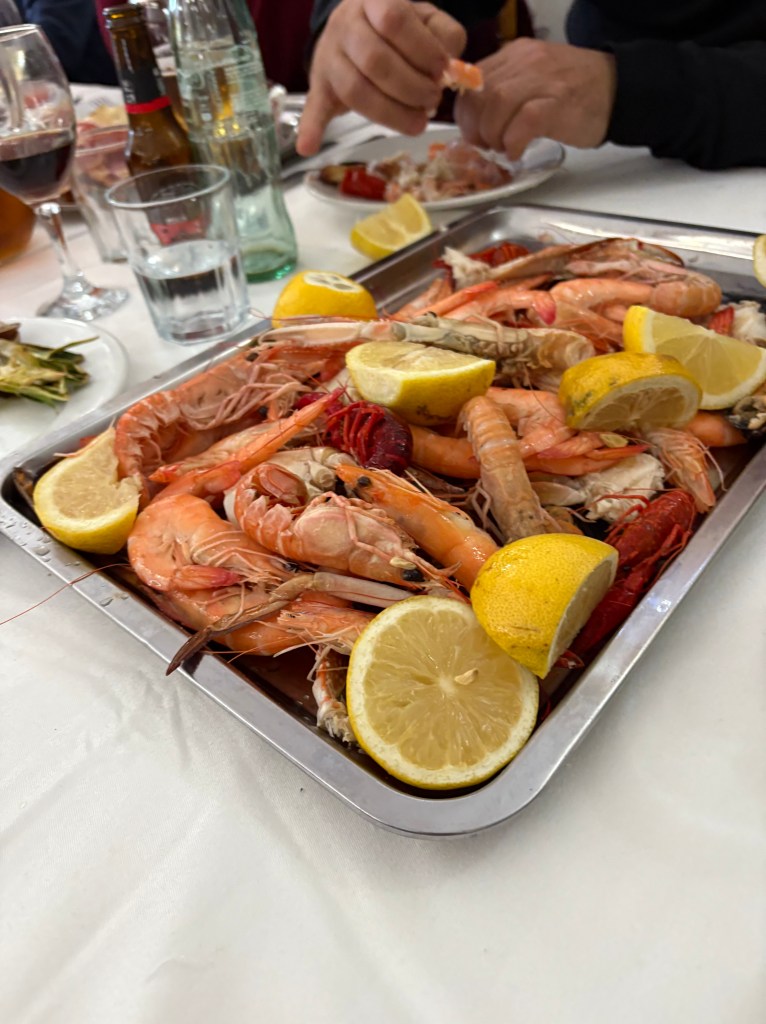
On top of seafood, tapas obviously rule restaurant culture here––tapas are small plates of finger foods meant to be eaten in sequence with wine or beer. Common ones are croquetas (small fried potato balls with a gravy-like ham sauce in the middle), jamon serrano (thin strips of cured ham with olive oil), calamari, olives, or patatas bravas (just steak fries with mayo and a spicy ketchup). I hate to say it, but none really burst with flavor or wow the palate. Most food here lacks any dynamic flavor and they overemphasize salt and oil in all their dishes. I miss Mexican food.
The Mexicans in this country, as it turns out, are actually Moroccan––the darker neighbor from the poorer country at the southern border, the ones the white population chastises for immigrating despite enriching their country with their cuisine and culture. Some of the best food in the town of Orihuela comes from the Kebab shops, usually run by Moroccans, North Africans, or Hindi people. It’s street food: cheap, fast, and delicious. A kebab rollo is the closest thing I can get to a burrito, and they even have a plate called taco, which is just a rollo in a thinner shape. Most kebab shops serve pizza and burgers, like how you would find in a Toms’ Jr in LA (minus the pizza), but I’m too scared to try those. I can get a full plate of shawarma, maybe even enough for two people, for just 5 euros (~$6), and the Hindi owners usually will want to practice English with me.
But let’s divert from restaurant culture; I’m not going to restaurants very often for three reasons: the majority of restaurants serve the exact same menu (in fact most restaurants don’t carry a menu because you can assume they’re serving the classic assortment of tapas and seafood that everyone else is), I don’t love Spanish cuisine, and I live here so I grocery shop. So let’s discuss my favorite cornucopia, my favorite source of food in this country: Mercadona.
Mercadona is a Spanish supermarket near me with, unfortunately, the best paella I’ve had in the region of Valencia, the very region that invented Spain’s famous dish. I haven’t had many paella’s, but there’s a shelf of hot and ready to-go bowls at the deli window of this grocer and whoever wants to call me inauthentic certainly has the right, but I’m telling you it’s fire. On top of that, the best grapes I’ve had in my life are from Mercadona, as well as the best olives, charcuterie, and kiwis… but the worst avocados. In my first month in Spain I was buying green grapes by the basketful––they were unbelievably crisp, sweet, full, and explosive. For the first time in my life it made me want to enjoy wine because I was curious if the wondergrapes translated to the bottle, but unfortunately it all still tasted the same to me. I eventually ate myself sick with grapes by late November and have taken a break.
Now for dessert: Spaniards love their sweets. Next to every kebab shop on the corner, there’s just as likely a pastry shop selling cakes, croissants, eclairs, cupcakes and for some reason also pizza. Pastries here are truly incomparable with pastries in America––the creams are thicker, sweeter, fluffier, and the crust is flakier, lighter, buttery-er. An American pastry is likely to leave you feeling heavy, sweet-sick, with all of its processed sugars and mass-produced breading. But Spain’s pastries carry a delicateness to them, an airiness. I’m telling myself that this translates to them being healthier as well, and so pastries now are a column on my budget’s spreadsheet.
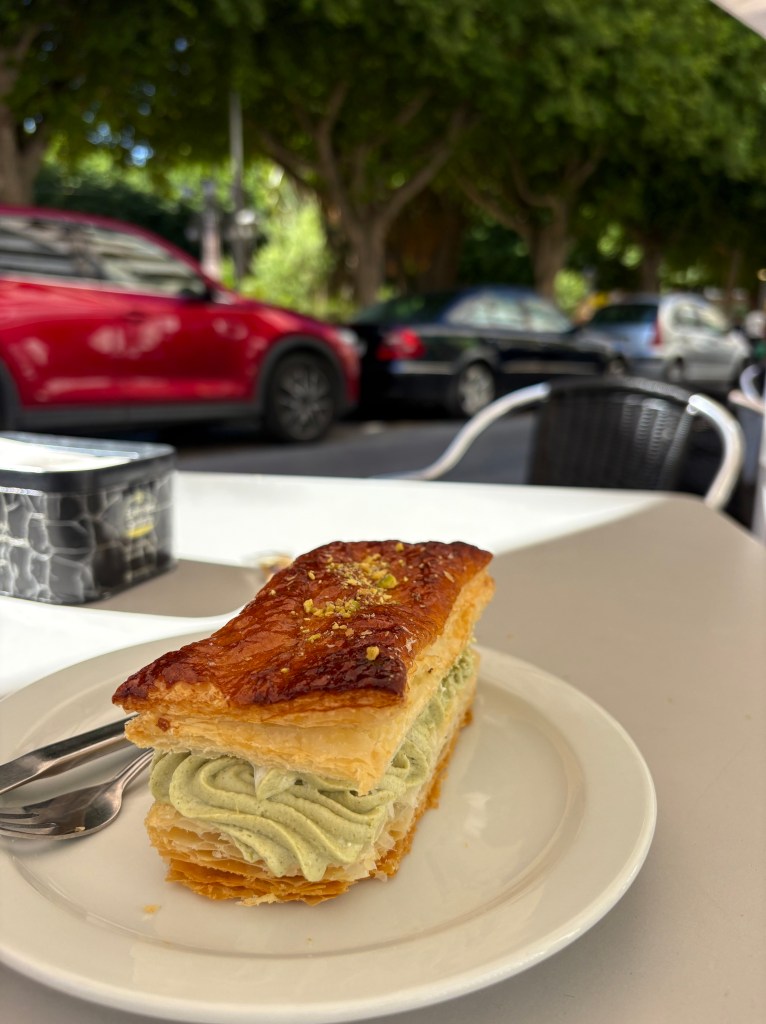
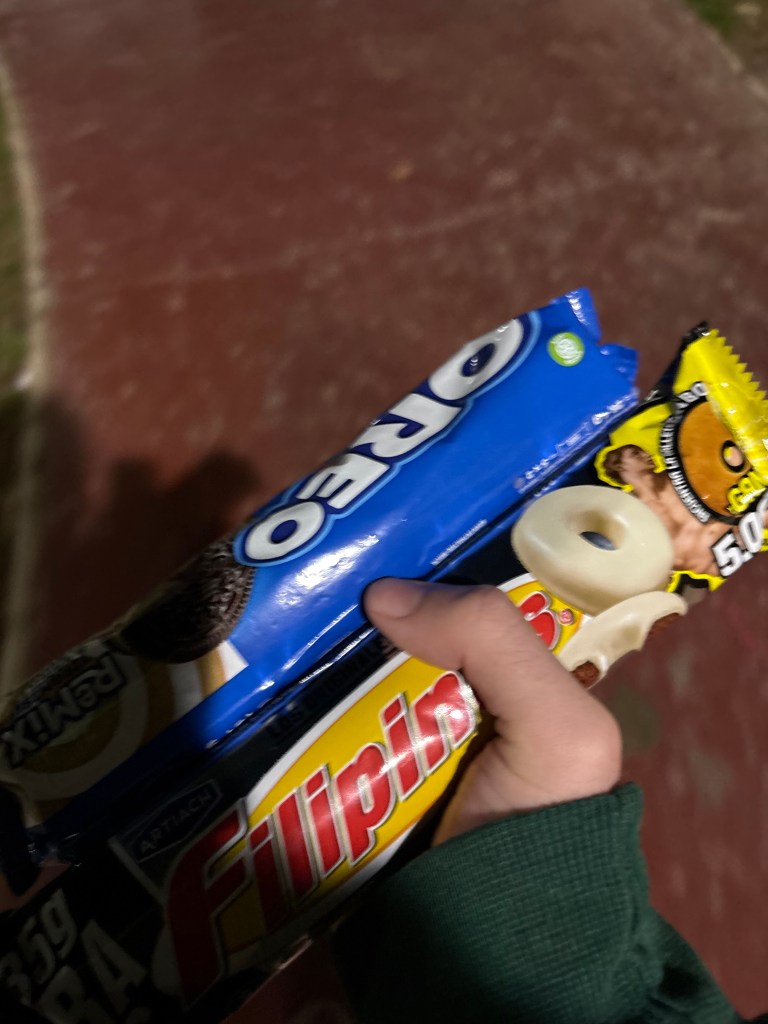
There is one dessert here, though, that has been with me through thick and thin, mostly thick, that I turn to in times of need and loneliness and homesickness, and that is the 10-pack of Tiramisu Oreos from MQM Tienda 24h, which I would eat completely in one sitting, in my bed, missing America.
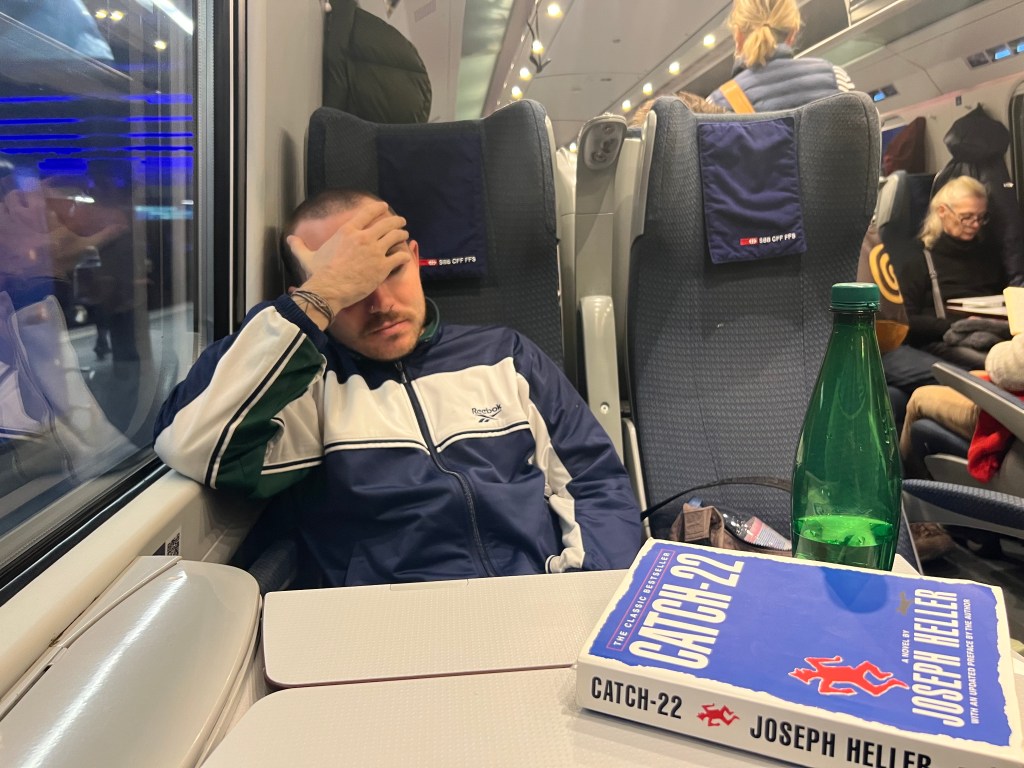
If it weren’t for the train station in the small, struggling rural town of Orihuela, Alicante, Spain, the town might already be dead, and I might be that much worse off. The metro train here connects my little town with two major cities nearby: Alicante, and Murcia, and thus, with the rest of Spain. I’m a two and a half hour high-speed train away from Madrid, which is just about two and a half hours away from any other corner of Spain. So, with no car I can get to most major areas of the country pretty conveniently and cheaply. It’s the small villages in between that lack train stations that I and no one else will see.
All the major cities have comprehensive tram lines, cheap bus systems, and are relatively walkable. I spent a weekend in Madrid navigating their underground railway, then two weeks later did the same thing in Barcelona. They were always cheap and always had a stop at where I wanted to go. My favorite, though, is the Alicante TRAM line, which is not underground, but actually more like a monorail, and runs up the entire southern coast of the Valencia region. The line takes you across emerald beaches and behind rocky mountains, and runs through the British retirement belt which include cities like Benidorm, Denia, Calp, and my favorite: Altea. It’s common for the British, as well as some Russians, to buy a small villa in their old age in one of these quiet Mediterranean coastal towns––and while you won’t hear much Spanish being spoken on these streets, the beaches are beautiful, the buildings serenely white and terraced up the side of the mountain, and public alcohol consumption and to go cups for Sangria (legally). If I want to live into the old age fantasy of drinking Estrella Galicia on a Mediterranean beach all day wearing a dumbass fedora, all I have to do is hit that Alicante Tram.
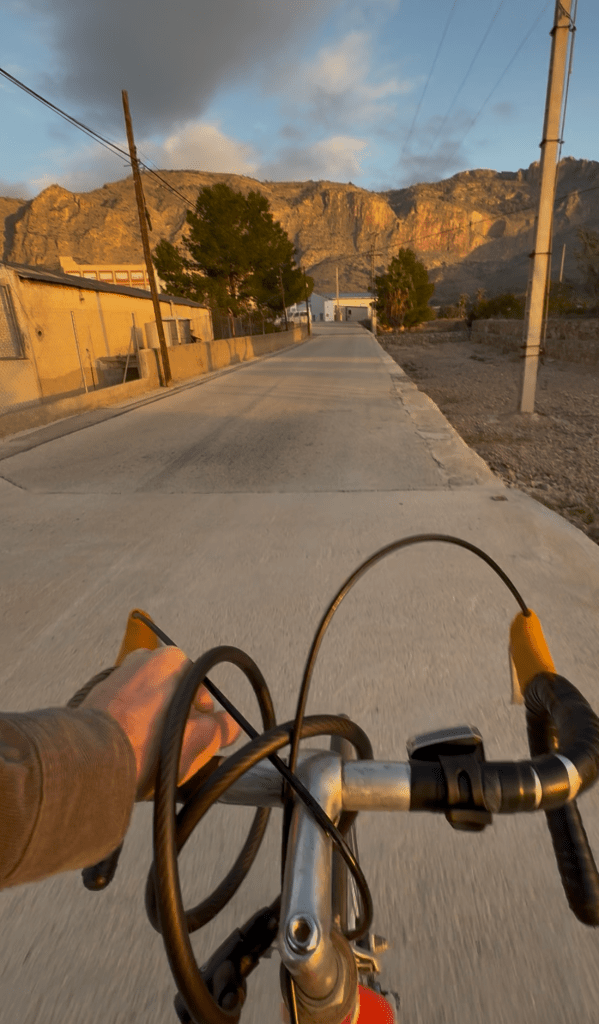
While that all sounds magical, and is, transportation within the city of Orihuela is lacking. The school I teach at is outside of the town, in an even more rural and secluded area called Raiguero de Bonanza. There is no busline running that direction and it’s too far to walk (also without a sidewalk or shoulder on the side of a two-lane highway), so my solution has been to bike… and that has been… eventful.
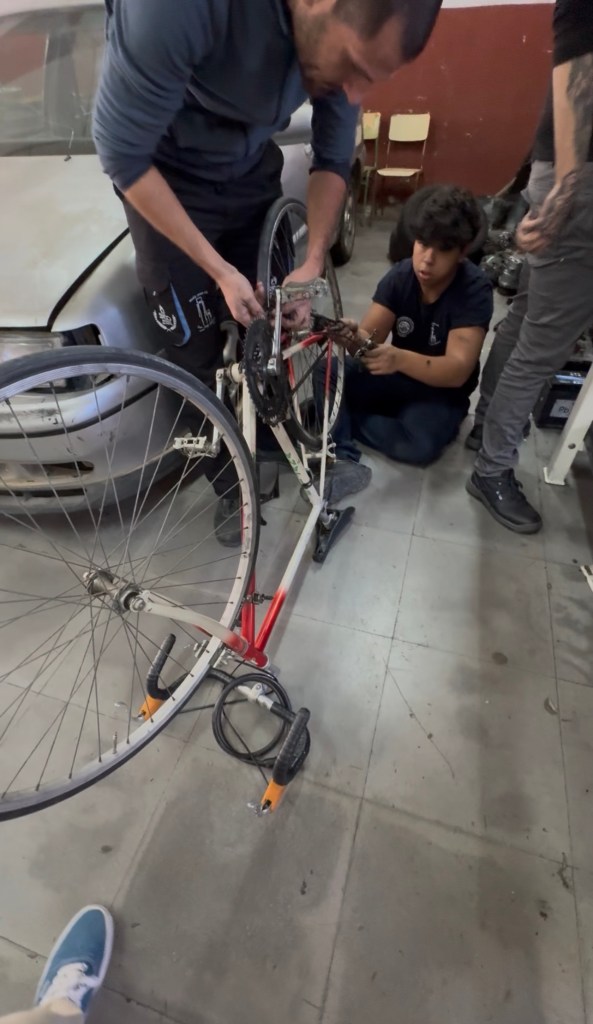
My first bike was 90€ from facebook marketplace and a total junker. Rusted and creaking, but manageable. I bought it in a rush because I had to get to school the next morning and didn’t have time to shop around. It was a ten-speed road bike with thin tires and a gear-changing system I had never seen before in America and never figured out. In fact, those gears were my downfall, emphasis on the falling down. The first mishap was when I tried to change gears on my ride home one day, and luckily, not on the highway, the chain came loose and my pedals locked, and I went bouncing into a curb at full speed and was tossed to the cement. I had a few scrapes and bruises on my elbow but luckily I was fine, though shaken up at the thought of that happening next to cars going 50mph with no bike lane. (When I say it like that, it sounds terrifying, but people jump out of planes and shit and I wear a helmet. Plus the drivers here are unbelievably respectful of cyclists. They give a wide berth, nearly entirely into the opposite lane––and if they can’t give a wide berth, they actually won’t pass; they’ll follow behind at 10mph until they can.) But that first fall was only a foreshadow to the inevitable explosion that came just days later. See, there’s a final stretch I make to the school every morning up this long and steep driveway, and still not knowing how to switch gears properly, I tend to brute-force it up that hill then pat myself on the back for my massive quads. But for some reason one morning, maybe I was tired, upset with my bike for throwing me off it the other day and determined to not let it get the better of me, I hit the switch one last time. Sure enough the chain falls off, only this time catching in the spokes of the wheel and pulling the entire cassette into the frame, at which point metal crashes with metal and parts shatter and I skid out, and my bike is destroyed. Not even the students at the technical school who work on fixing motorcycles are able to put it back together. So for the next week while I search for my next bike, I either make the trek on foot, ask a teacher to carpool or, like I did one day, awkwardly get on the school bus with my students where they greet me with applause and I’m reminded everything is going to be okay.
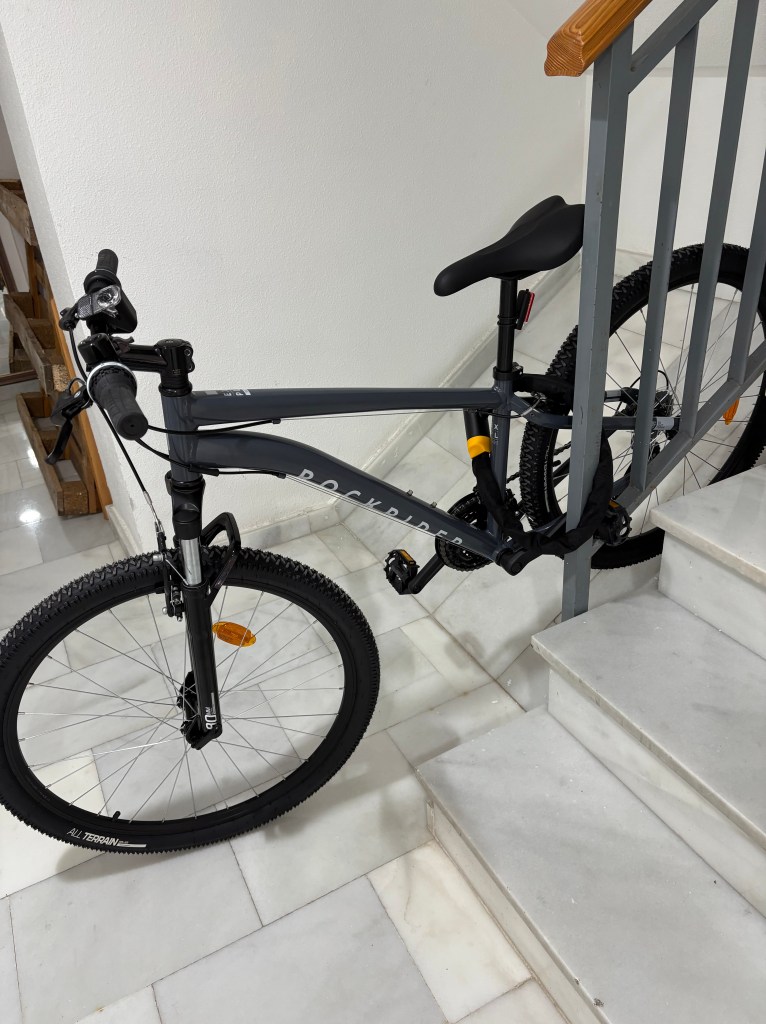
Since then I’ve gotten a new bike, a much nicer one that I rent long-term from a Big-5-esque store (let’s call it Grande Cinco) who encharges themselves with the bike’s maintenance. The students still cheer me on, now just from inside the bus as it gives me a wide berth when it passes me on the highway.
Luke
 swellpunk.com